Introduction
India’s 80th Independence Day was not just a celebration of the country’s journey so far. It also offered a clear vision of where India wants to go next.
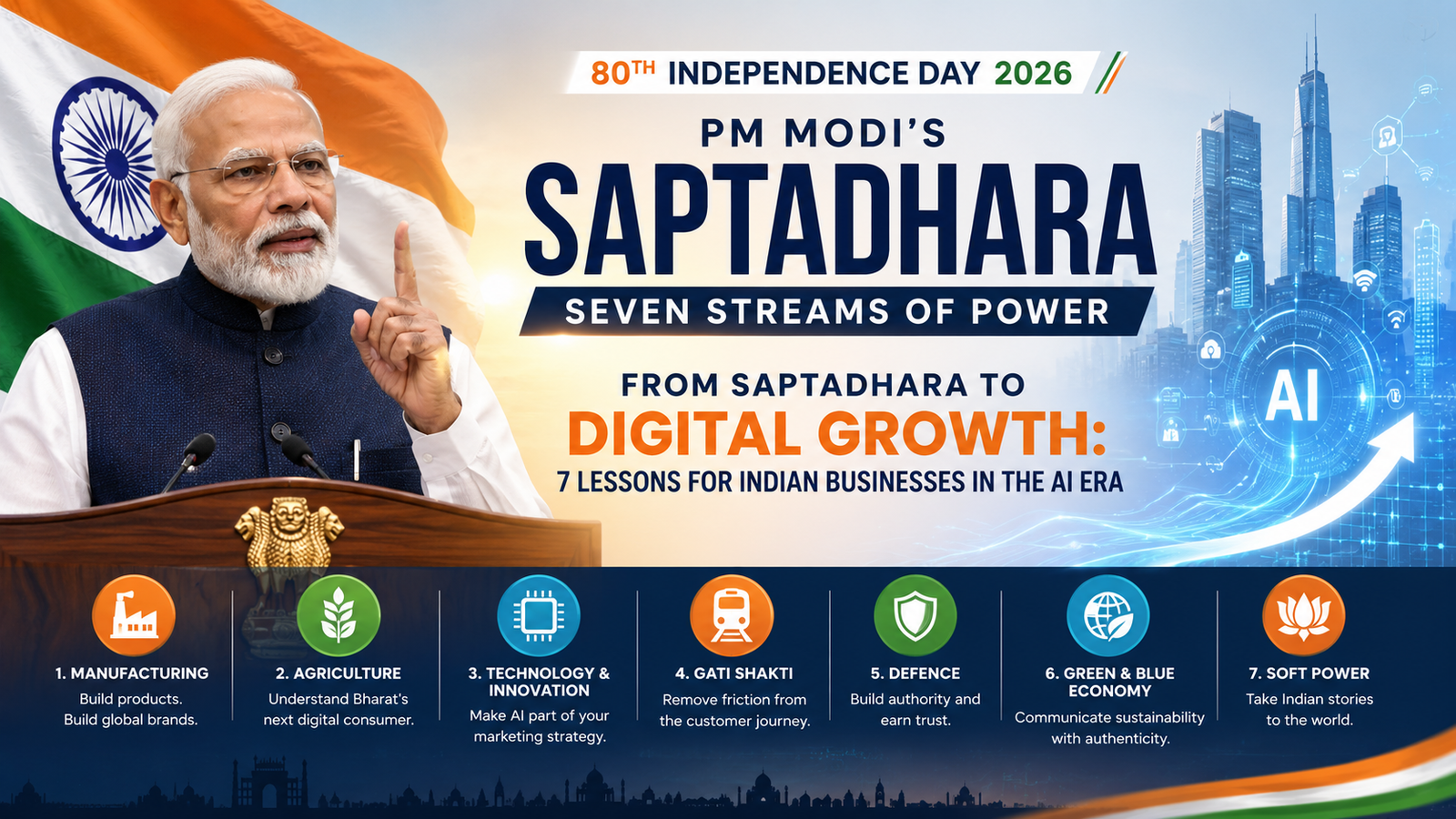
In his Independence Day address from the Red Fort on August 15, 2026, Prime Minister Narendra Modi introduced Saptadhara, or seven streams of power, as a framework for strengthening India’s journey towards Viksit Bharat 2047. The framework focuses on manufacturing, agriculture and food processing, technology and innovation, Gati Shakti, defence self-reliance, the green and blue economies, and India’s soft power.
At first, Saptadhara may sound like a national development framework with little connection to digital marketing.
But look closer.
Every stream has a digital story behind it.
Today, building a great product is not enough. Businesses need to become discoverable, build trust, understand customer intent and create experiences across multiple digital channels.
More importantly, AI is changing how customers discover brands.
The question is no longer only, “Can customers find my business on Google?”
It is increasingly becoming:
“Can AI understand, recommend and talk about my business?”
That is where Saptadhara becomes highly relevant for marketers and Indian businesses.
Summary: What Saptadhara Means for Digital Growth
The seven streams offer seven valuable lessons for businesses:
Manufacturing: Build products and brands that can compete globally.
Agriculture: Understand India’s next wave of digital consumers.
Technology & Innovation: Make AI part of your marketing strategy.
Gati Shakti: Create connected and frictionless customer journeys.
Defence: Build authority, credibility and trust.
Green & Blue Economy: Communicate sustainability authentically.
Soft Power: Take Indian stories and brands to global audiences.
The bigger message is simple:
India’s growth will depend not only on what businesses produce, but also on how effectively they communicate, connect and compete in the digital world.
1. Manufacturing: Build Products and Discoverable Brands

Manufacturing forms one of the important pillars of Saptadhara.
For Indian businesses, manufacturing growth creates an opportunity to compete beyond domestic markets.
But producing a great product is only one part of the journey.
Customers also need to discover it.
This is where digital marketing becomes a growth engine.
An Indian manufacturer should not think only in terms of:
Make in India → Sell in India
The bigger opportunity is:
Make in India → Build in India → Market globally → Sell globally.
Businesses can support this journey through international SEO, content marketing, LinkedIn marketing, digital PR, product-led content and AI Search optimisation.
A world-class product needs a world-class digital presence.
That is the first Saptadhara lesson: build something valuable, but make sure the world can find it.
2. Agriculture: India’s Next Digital Consumer Is Not Limited to Metro Cities
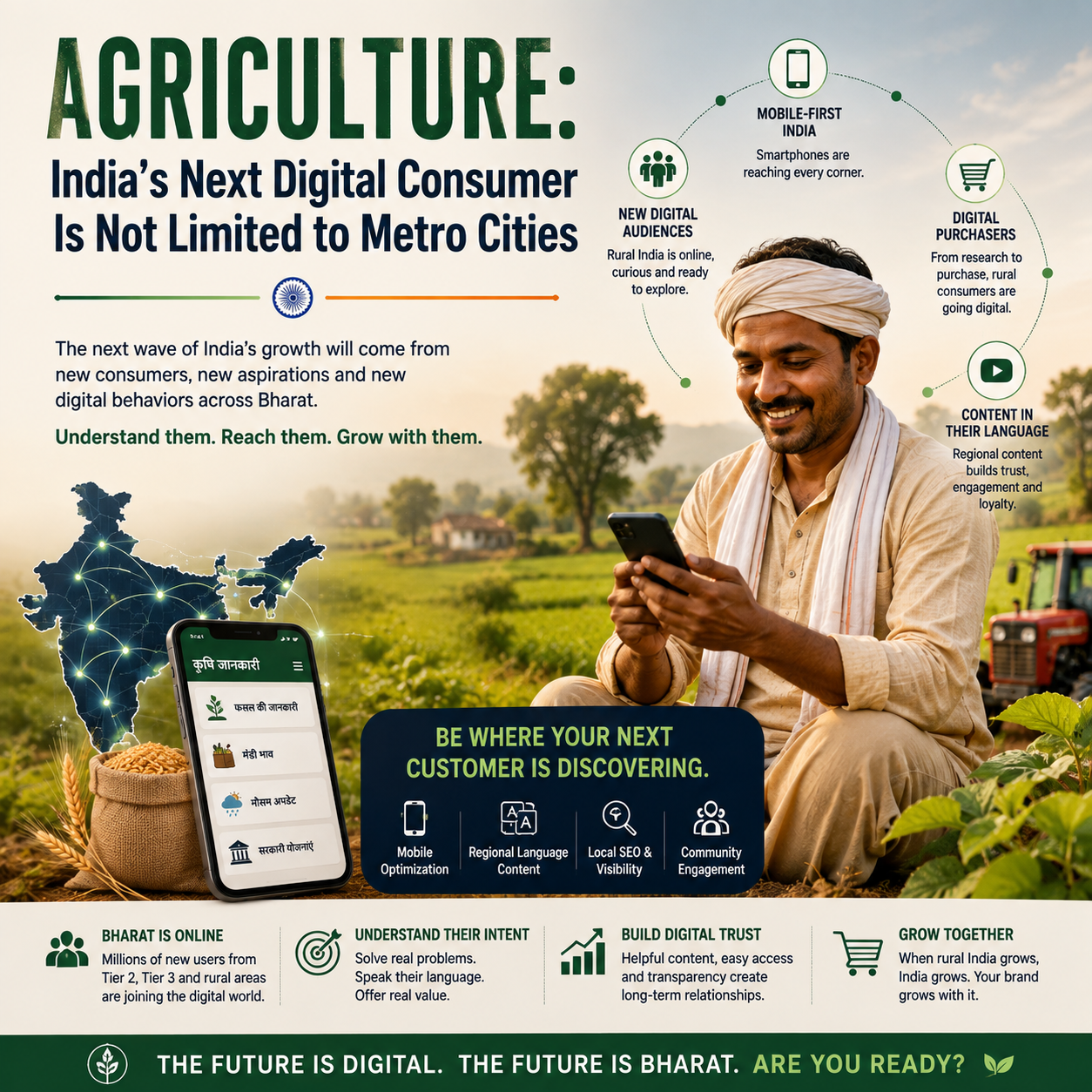
The agriculture and food-processing stream highlights another important opportunity for marketers.
India’s digital audience is no longer restricted to major metropolitan cities.
People across Tier 2, Tier 3 and rural markets are increasingly using digital platforms to discover information, compare products, watch videos and make purchasing decisions.
This creates a major opportunity for Indian businesses.
Brands can use:
Regional-language content
Vernacular SEO
Short-form video
Mobile-first websites
Social commerce
Local SEO
Community-based marketing
The question businesses should ask is no longer:
“Who is our urban customer?”
Instead, ask:
“Who is the next digital consumer we have not understood yet?”
The second Saptadhara lesson is clear: India’s digital growth story extends far beyond metro cities.
3. Technology & Innovation: AI Is No Longer Optional for Marketers
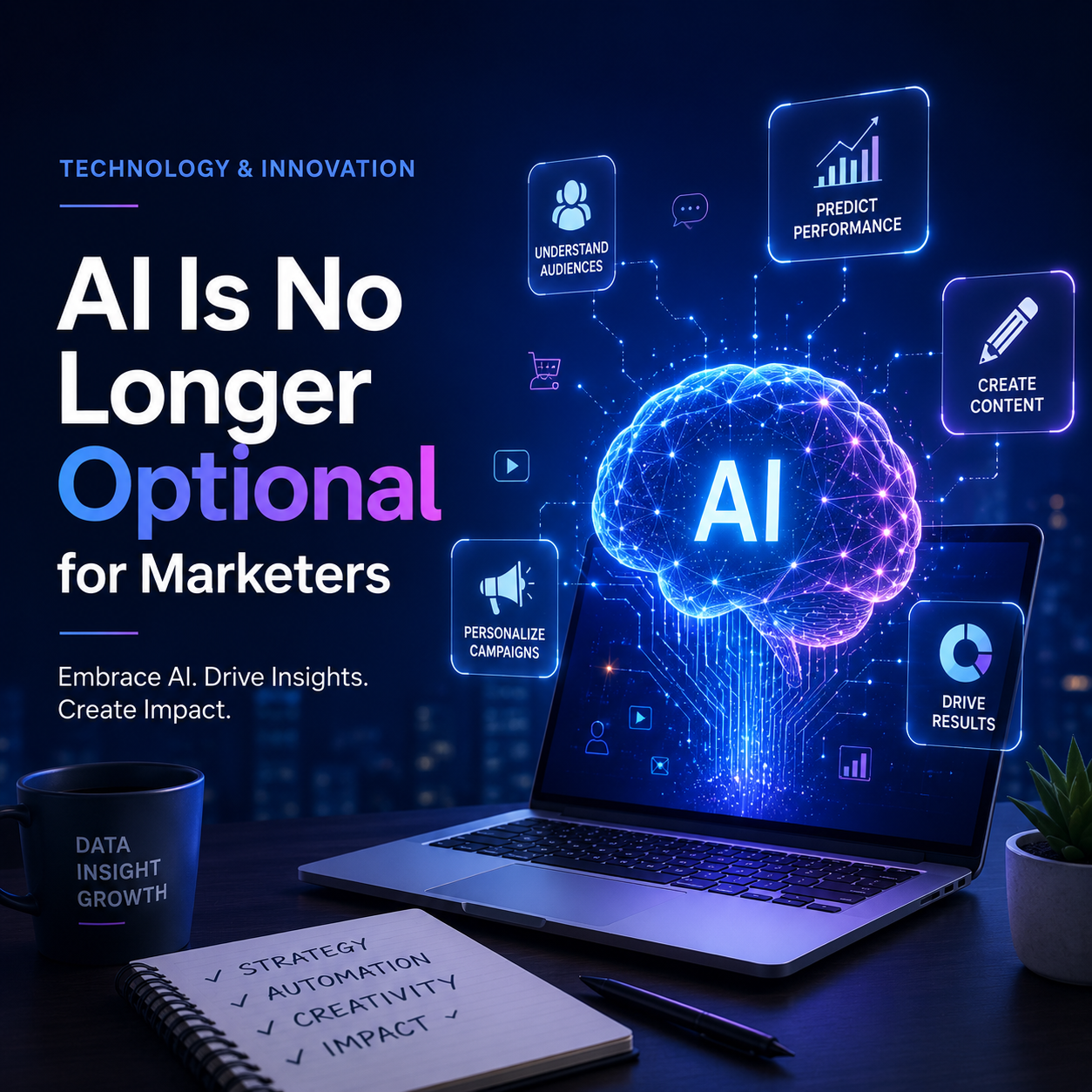
This is perhaps the strongest connection between Saptadhara and digital marketing.
Technology and innovation will play a major role in India’s future growth. For marketers, this means AI can no longer remain just an experimental tool.
AI needs to become part of the marketing strategy.
Traditional search focused heavily on ranking websites for specific keywords.
But AI Search is changing the discovery journey.
Earlier, businesses asked:
“How do I rank on Google?”
Now they also need to ask:
“How does AI understand my brand?”
And increasingly:
“When someone asks an AI assistant for a recommendation, will my brand appear in the answer?”
This changes the way businesses approach SEO.
Keywords still matter. However, marketers also need to focus on entities, topical authority, structured information, brand mentions, reviews, expertise and trust.
The third Saptadhara lesson is simple:
Do not use AI only to create content. Build a business that AI can understand.
4. Gati Shakti: Connect Every Part of the Customer Journey
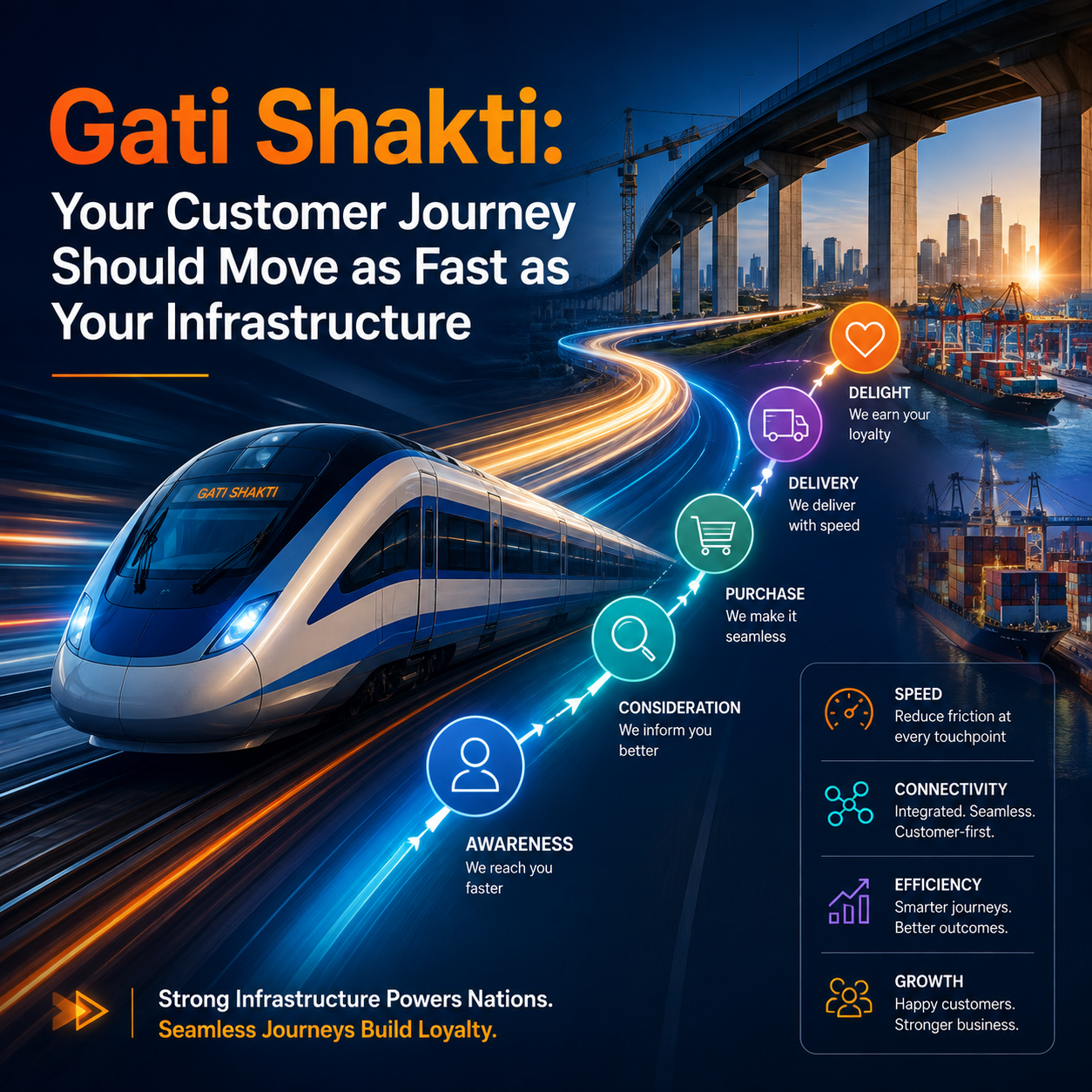
Gati Shakti focuses on connectivity, infrastructure and faster movement.
Digital marketers can apply the same principle to customer experience.
Think about a modern customer journey:
Search → Website → Content → Social Media → Review → Purchase → Support
If these channels work separately, customers experience friction.
Someone may discover your brand through Google but struggle to find useful information on your website.
Another customer may discover your social media page but still not understand your product.
This is a digital connectivity problem.
Businesses should connect:
SEO + Content + Social Media + Website + CRM + Analytics + Customer Experience
Instead of operating these channels in silos, businesses should make them work together.
The fourth Saptadhara lesson is:
Your customer journey should move as smoothly as your business infrastructure.
5. Defence: Trust Is a Digital Competitive Advantage

Defence self-reliance represents another important stream.
Although defence and digital marketing may seem unrelated, they share one powerful principle:
Trust.
Customers do not choose brands simply because those brands appear online.
They choose brands they believe.
This becomes even more important in the AI era.
AI systems increasingly evaluate information from multiple sources. Businesses with strong digital authority can therefore create a stronger foundation for visibility.
Brands should invest in:
Original research
Expert-led content
Customer reviews
Case studies
Thought leadership
Digital PR
Author credibility
Consistent brand information
The fifth Saptadhara lesson is:
Visibility gets attention, but credibility earns trust.
6. Green & Blue Economy: Sustainability Needs Authentic Storytelling
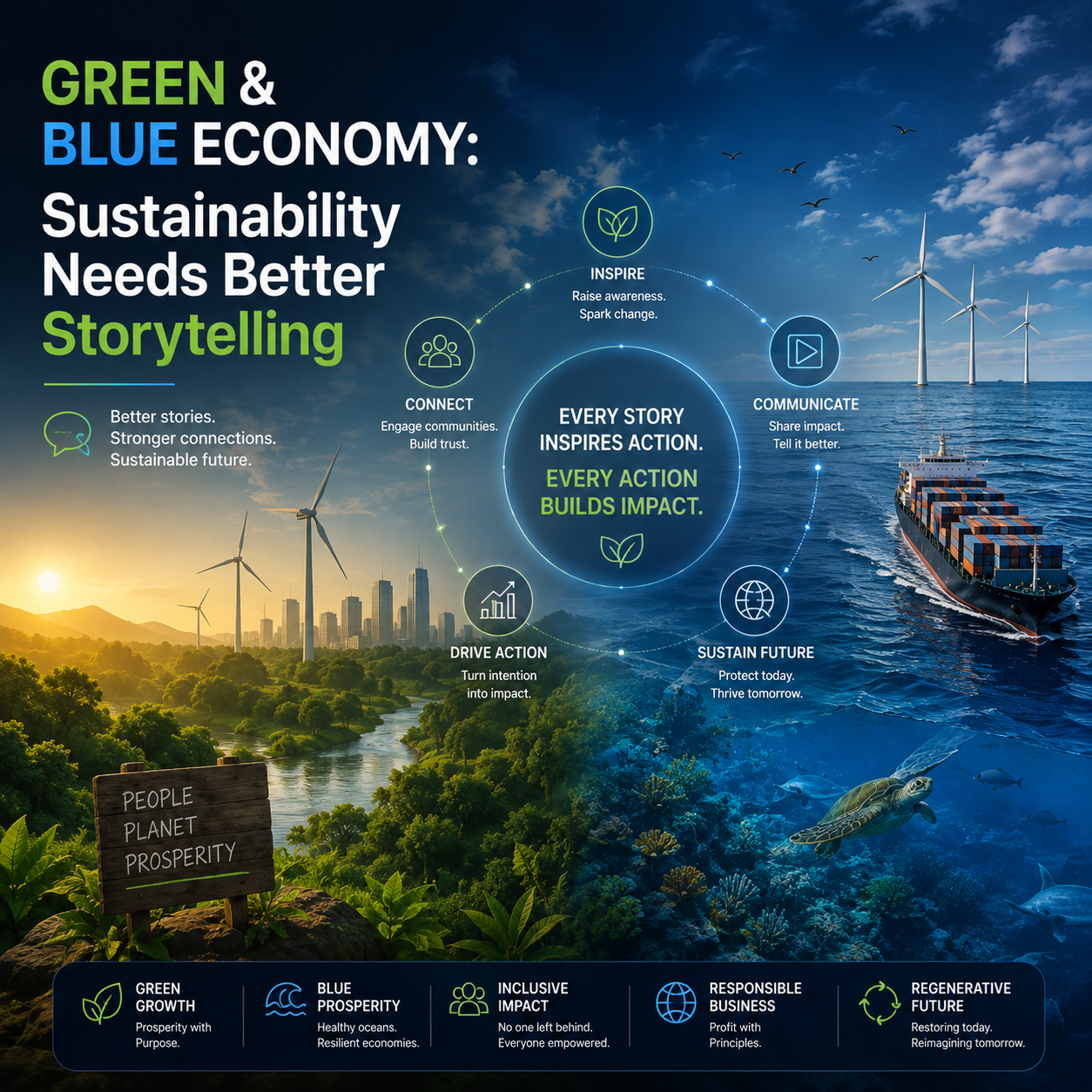
The green and blue economy represents another important area of future growth.
For marketers, sustainability creates both an opportunity and a responsibility.
Simply claiming that a business is sustainable is no longer enough.
Customers want to understand the action behind the claim.
Instead of saying:
“We are a sustainable brand.”
Businesses should explain:
What they are doing
Why they are doing it
What impact they have created
What evidence supports their claims
How customers benefit
Content marketing can help businesses communicate these initiatives clearly.
Good storytelling can turn complex sustainability efforts into information that customers can understand and trust.
The sixth Saptadhara lesson is:
Do not market sustainability louder. Communicate it more authentically.
7. Soft Power: Take Indian Brands to the World
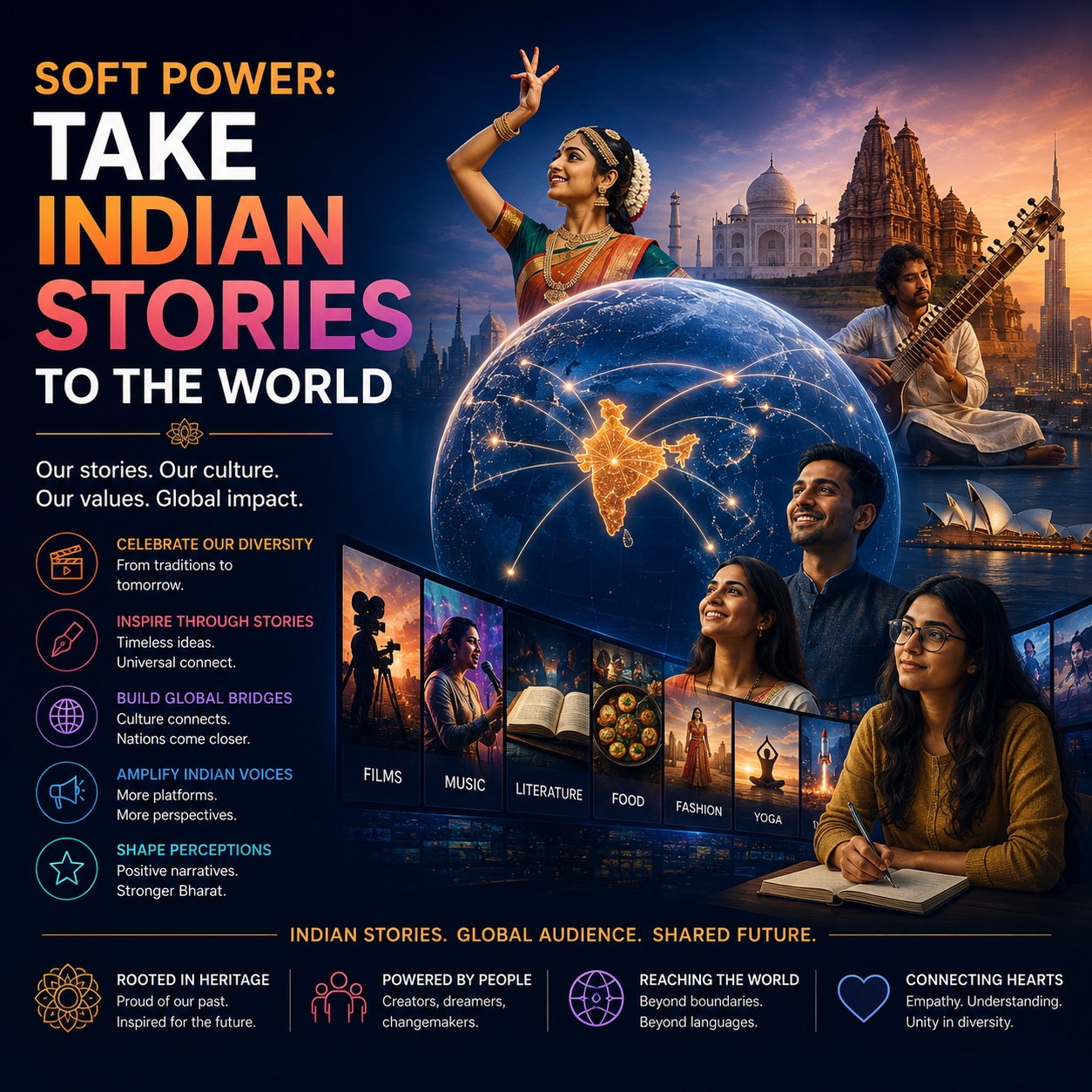
The final stream opens one of the most exciting opportunities for digital marketers: India’s soft power.
India already has global influence through yoga, Ayurveda, food, cinema, music, art, fashion, spirituality and technology.
Digital platforms can take this influence much further.
A local Indian brand can now reach international customers without opening offices in every country.
A creator can build a global audience from a smaller Indian city.
A D2C brand can sell internationally.
An Indian SaaS company can compete with global technology businesses.
A traditional craft business can tell its story to customers around the world.
This is the power of digital marketing.
Soft power + digital content = global influence.
The seventh Saptadhara lesson is:
Indian businesses should not only participate in the global market. They should build brands that represent India globally.
What Saptadhara Means for the Future of Digital Marketing
When we connect all seven streams, one larger picture emerges.
India is preparing for a future driven by technology, innovation, connectivity, sustainability and global influence. Indian businesses need to prepare for the same future.
The future of digital marketing will not be about chasing traffic alone.
It will be about building:
Discoverability + Authority + Trust + Experience
Traditional SEO asks:
“Can people find you?”
AI Search asks:
“Can AI understand you?”
Branding asks:
“Can people trust you?”
Global digital marketing asks:
“Can customers anywhere in the world discover and choose you?”
These questions are becoming interconnected.
That is why businesses need a complete digital marketing strategy instead of relying on one channel.
FAQs
What is Saptadhara?
Saptadhara refers to the seven streams of power presented as part of India’s broader development vision. The framework covers manufacturing, agriculture and food processing, technology and innovation, Gati Shakti, defence self-reliance, green and blue economies, and soft power.
How is Saptadhara connected to digital marketing?
Each stream creates opportunities for digital growth. Businesses can use SEO, AI Search, content marketing, social media, digital PR and data-driven strategies to reach customers and strengthen their brands.
Why is AI important for Indian businesses?
AI is changing how people search for information, compare businesses and discover products. Businesses therefore need to make their information clear, authoritative and easy for AI systems to understand.
What does Saptadhara mean for SEO?
Saptadhara reinforces the need for businesses to build strong digital visibility. Modern SEO should go beyond keywords and focus on helpful content, topical authority, structured information, brand credibility and user experience.
How can small Indian businesses benefit from digital marketing?
Small businesses can start with a strong website, local SEO, useful content, social media, customer reviews and mobile-friendly experiences. They can then expand into AI Search, digital PR and international marketing as they grow.
Conclusion
Saptadhara is ultimately a vision built around seven interconnected streams of growth.
Indian businesses can learn an equally important lesson from this framework: sustainable digital growth cannot depend on one channel.
SEO alone is not enough.
Social media alone is not enough.
Content alone is not enough.
AI tools alone are not enough.
Businesses need an ecosystem where technology, content, search, branding, customer experience and trust work together.
India is preparing for its next phase of growth.
Indian businesses should prepare too.
The future will not belong only to companies that build great products.
It will belong to businesses that can build, communicate, connect, earn trust and remain discoverable in an AI-first world.
Build for India. Think global. Be discoverable. Be trusted. Prepare for AI.
Build Your Digital Future with Vidya Sarthi
The AI era is creating new opportunities, but staying relevant requires the right digital skills and knowledge.
Whether you are a student, aspiring marketer or professional looking to understand the changing digital landscape, learning today can prepare you for the opportunities of tomorrow.
Explore Vidya Sarthi and take the next step towards building your skills, knowledge and career for a technology-driven future.
Your future is digital. Start preparing for it today.