Introduction
Artificial Intelligence is no longer limited to futuristic ideas. It has become part of how businesses work, how students learn and how people search for information.
Two terms are gaining particular attention: Agentic AI vs Generative AI.
While both technologies use AI to perform tasks, they work in very different ways.
Generative AI creates content based on the instructions a user provides. It can write an article, create an image, generate code or summarise information.
Agentic AI goes a step further. It can understand a goal, plan multiple steps, use tools, make decisions and take action with limited human intervention.
So, what exactly is the difference between Agentic AI vs Generative AI? And more importantly, which one will have a bigger impact on the future?
Let’s understand it in simple terms.
Summary: Agentic AI vs Generative AI
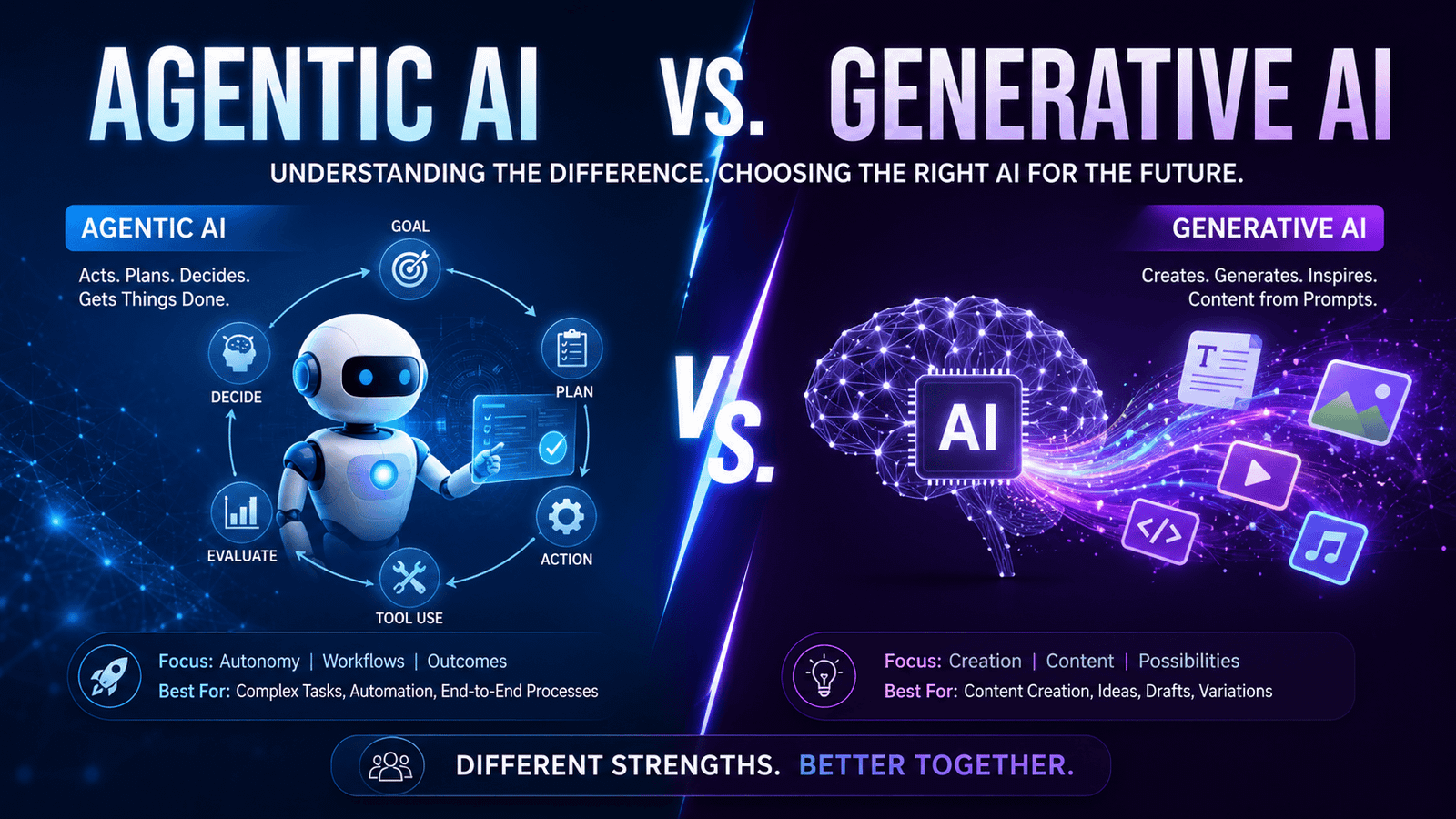
The easiest way to understand Agentic AI vs Generative AI is to look at their primary purpose.
Generative AI creates.
Agentic AI acts.
Generative AI responds to prompts and produces outputs such as text, images, videos, code or summaries.
Agentic AI focuses on achieving a goal. It can break a task into smaller steps, select tools, evaluate results and continue working towards the desired outcome.
For example, you can ask Generative AI to write an email.
An AI agent could understand that you need to send the email, check relevant information, personalise the message, schedule it and complete the workflow using connected tools.
Therefore, both technologies have value. However, they solve different types of problems.
What Is Generative AI?
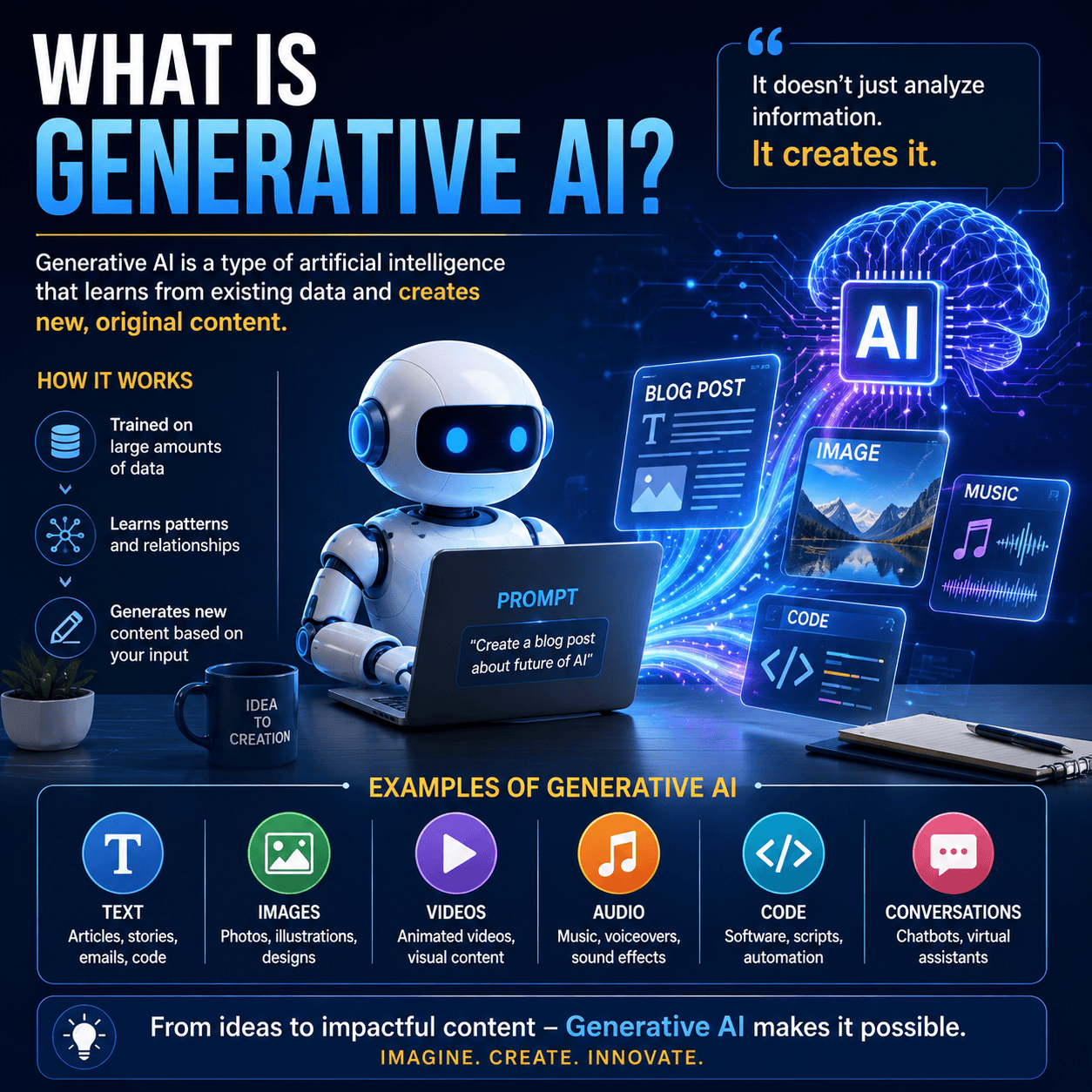
Generative AI refers to artificial intelligence systems that can create new content.
Instead of simply analysing existing information, these systems generate new outputs based on patterns learned from large amounts of data.
Some common examples include:
Blog posts
Emails
Images
Videos
Computer code
Product descriptions
Summaries
Social media captions
Audio and music
When you use a chatbot to draft an email or ask an AI tool to create an image, you are using Generative AI.
The biggest strength of Generative AI is content creation.
It helps people save time and produce first drafts faster. Businesses can also use it for brainstorming, customer communication, marketing content and research assistance.
However, Generative AI usually waits for a user instruction.
You give it a prompt.
It gives you an output.
That is where Agentic AI starts to differ.
What Is Agentic AI?
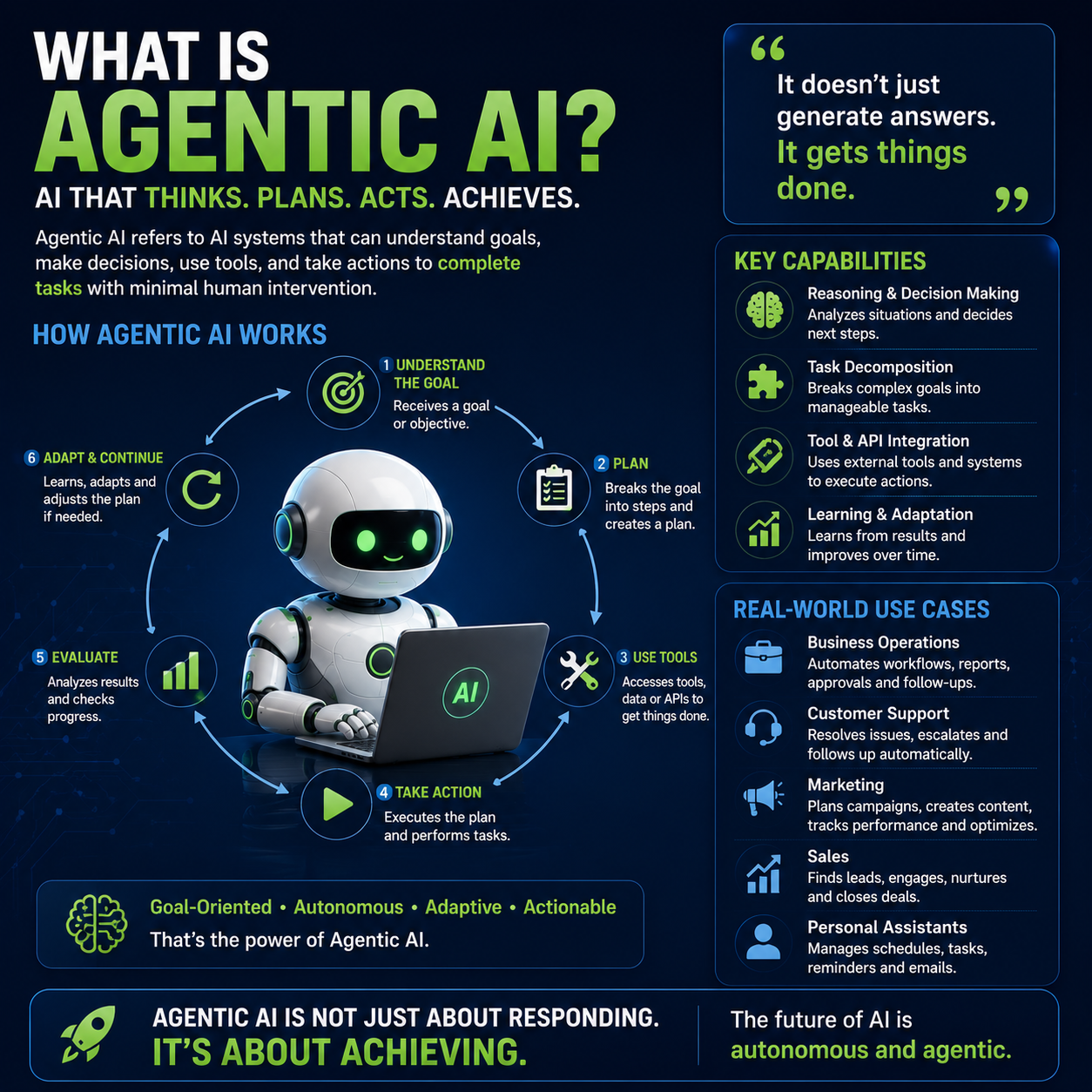
Agentic AI refers to AI systems designed to work towards a specific goal and take actions to achieve it.
Instead of simply responding to one prompt, an AI agent can follow a workflow.
It can:
Understand a goal
Break the goal into tasks
Plan the next steps
Use available tools
Analyse the results
Make decisions
Adjust its approach
Complete the task
This makes Agentic AI particularly useful for complex and repetitive workflows.
For example, imagine asking an AI system:
“Find potential customers for my business and prepare a campaign.”
A traditional Generative AI tool might help you create the campaign copy.
An agentic system could potentially research prospects, organise information, identify suitable audiences, prepare campaign assets, analyse results and recommend the next action, depending on the tools and permissions available to it.
That difference is important.
Generative AI helps create the answer. Agentic AI focuses on completing the task.
Agentic AI vs Generative AI: Key Differences
Understanding Agentic AI vs Generative AI becomes easier when we compare them across different areas.
1. Primary Purpose
Generative AI primarily creates content.
Agentic AI primarily completes goals and tasks.
For example, Generative AI can write a product description, while an AI agent could potentially manage multiple steps involved in a product marketing workflow.
2. Human Involvement
Generative AI generally needs human prompts to generate an output.
Agentic AI can operate through a predefined goal and workflow, depending on the system’s design and permissions.
This does not mean AI agents should work without supervision.
Human oversight remains important, especially when an agent can take actions that affect customers, money, data or business operations.
3. Decision-Making
Generative AI typically generates an answer based on the user’s request.
Agentic AI can evaluate the situation, decide what step should come next and continue towards its goal.
This makes Agentic AI more suitable for multi-step processes.
4. Tool Usage
Generative AI can generate information or content.
Agentic AI can connect with tools, applications, databases and APIs to perform actions.
For example, an agent may use a calendar, CRM, search system or business database as part of a workflow.
5. Workflow
Generative AI usually follows a simple pattern:
Prompt → Response
Agentic AI can follow a more advanced pattern:
Goal → Plan → Action → Evaluation → Next Action → Result
This is one of the biggest differences in Agentic AI vs Generative AI.
Agentic AI vs Generative AI: Real-World Examples
Let’s make the comparison even simpler.
Example 1: Marketing
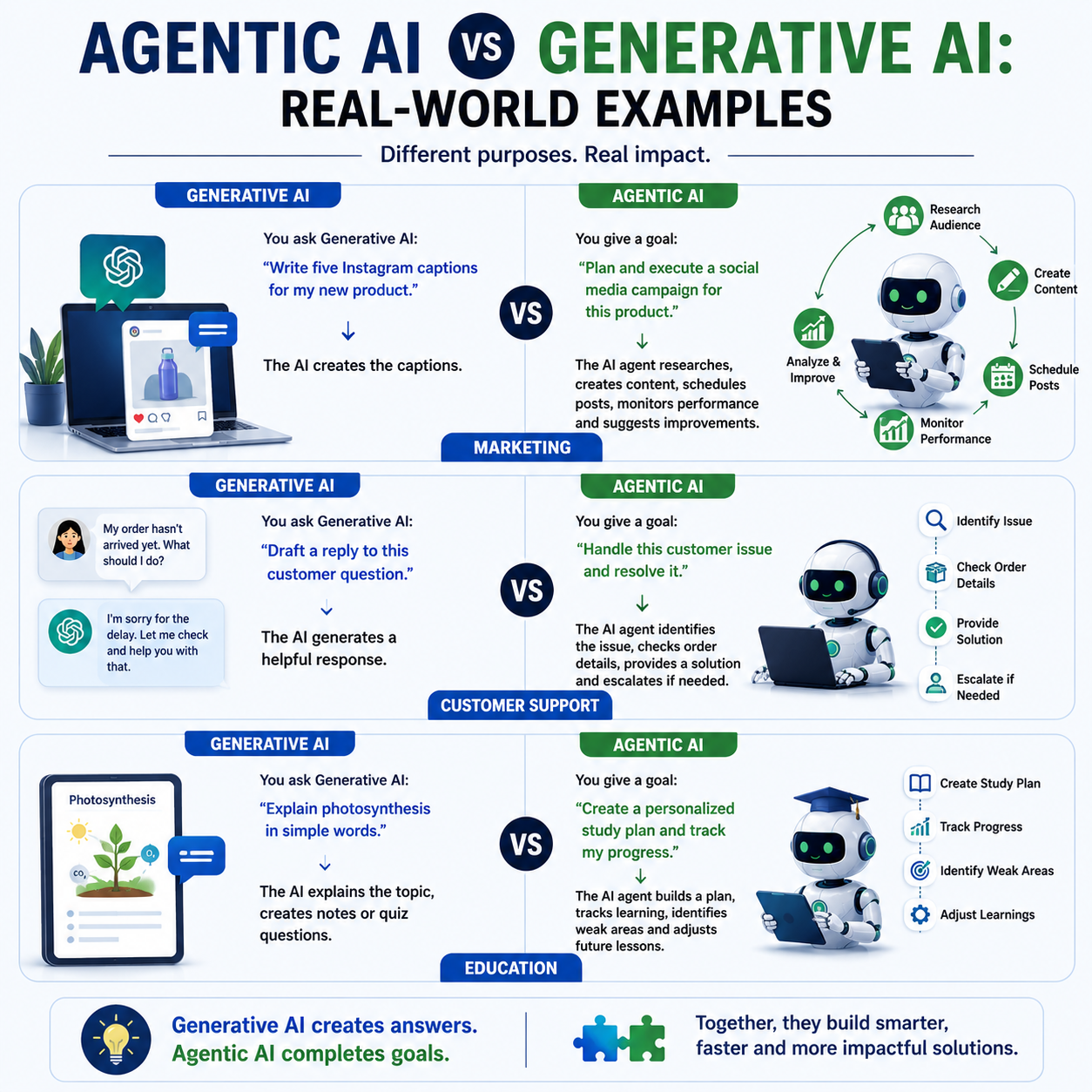
You ask Generative AI:
“Write five Instagram captions for my new product.”
The AI creates the captions.
With an agentic system, you could define a broader objective such as:
“Plan and execute a social media campaign for this product.”
Depending on its integrations and permissions, the agent could research the audience, create content, organise a posting schedule, monitor performance and suggest improvements.
Example 2: Customer Support
Generative AI can draft responses to customer questions.
Agentic AI can potentially handle a complete support workflow by identifying the issue, checking relevant information, deciding the appropriate action and escalating complex cases to a human.
Example 3: Education
Generative AI can explain a topic, create notes or generate quiz questions.
An AI agent could potentially build a learning plan, track progress, identify weak areas and adjust future learning activities.
This shows why Agentic AI vs Generative AI is not simply a competition between two technologies.
They can work together.
Can Generative AI and Agentic AI Work Together?
Yes.
In fact, their combination can create a powerful AI workflow.
Think of Generative AI as the content and reasoning engine, while Agentic AI acts as the goal-oriented workflow layer.
An AI agent may use Generative AI to:
Understand natural-language instructions
Create content
Summarise information
Analyse data
Generate responses
Help make decisions
The agent then uses these capabilities to complete a larger task.
Therefore, the future may not be about choosing one technology over the other.
Instead, businesses may combine both.
Generative AI can create. Agentic AI can coordinate and act.
Why Does Agentic AI Matter for Businesses?
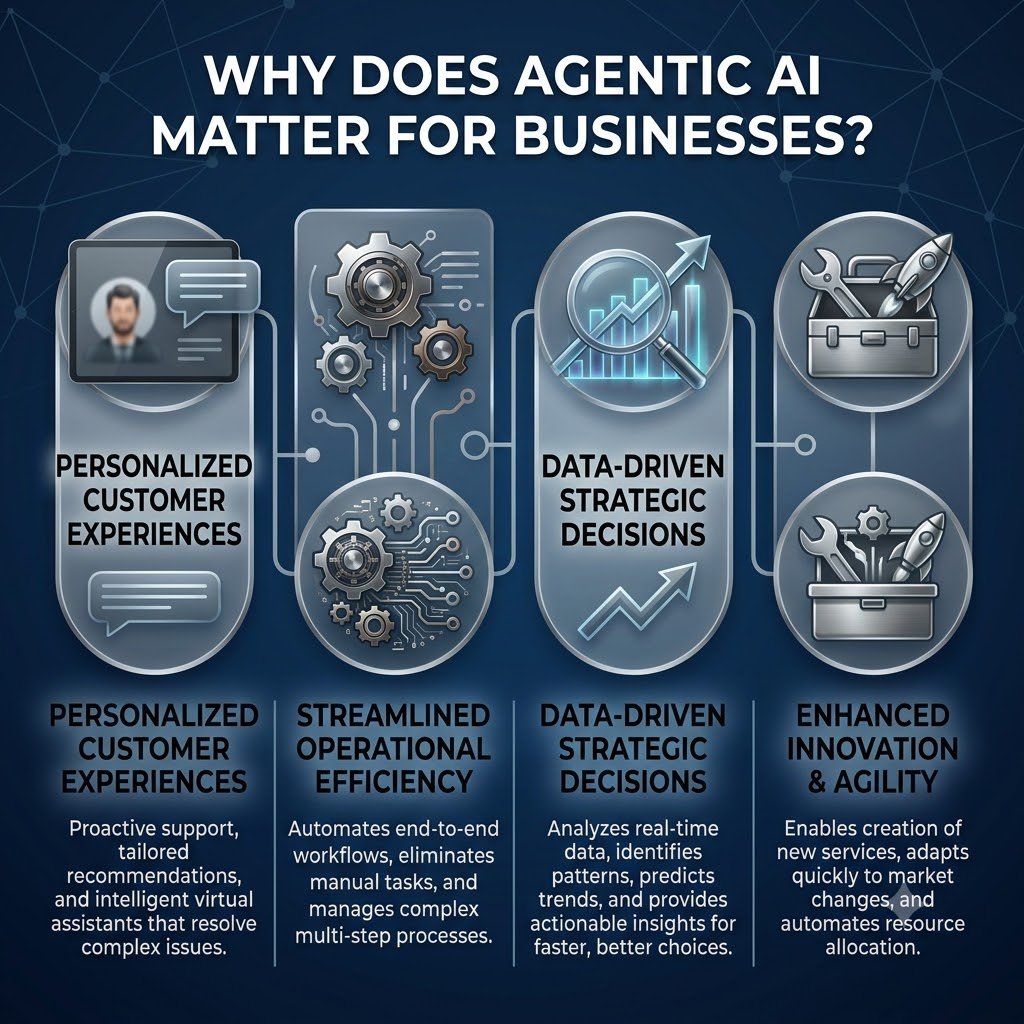
Businesses constantly manage repetitive and multi-step processes.
Marketing teams manage campaigns.
Sales teams follow up with leads.
Customer support teams answer questions.
HR teams manage employee workflows.
Operations teams track multiple processes.
Agentic AI can potentially automate parts of these workflows.
This can help businesses reduce repetitive work and allow employees to focus on higher-value activities.
However, businesses should not automate everything simply because they can.
They need to identify where AI can genuinely improve speed, efficiency and customer experience.
The right question is not:
“Where can we use AI?”
It is:
“Which business problem can AI solve better or faster?”
What Does the Future Look Like?
The evolution from Generative AI to Agentic AI represents a broader shift in how we interact with technology.
Earlier, we used software by clicking buttons and following workflows.
Then, Generative AI allowed us to communicate with software using natural language.
Now, agentic systems are moving towards a model where we can give technology a goal and allow it to manage multiple steps.
This could change digital marketing, education, customer service, healthcare, finance, software development and many other industries.
For students and professionals, this shift also creates an important opportunity.
Learning how AI works will become increasingly valuable.
But knowing how to use AI responsibly and strategically will matter even more.
Agentic AI vs Generative AI: Which One Is Better?
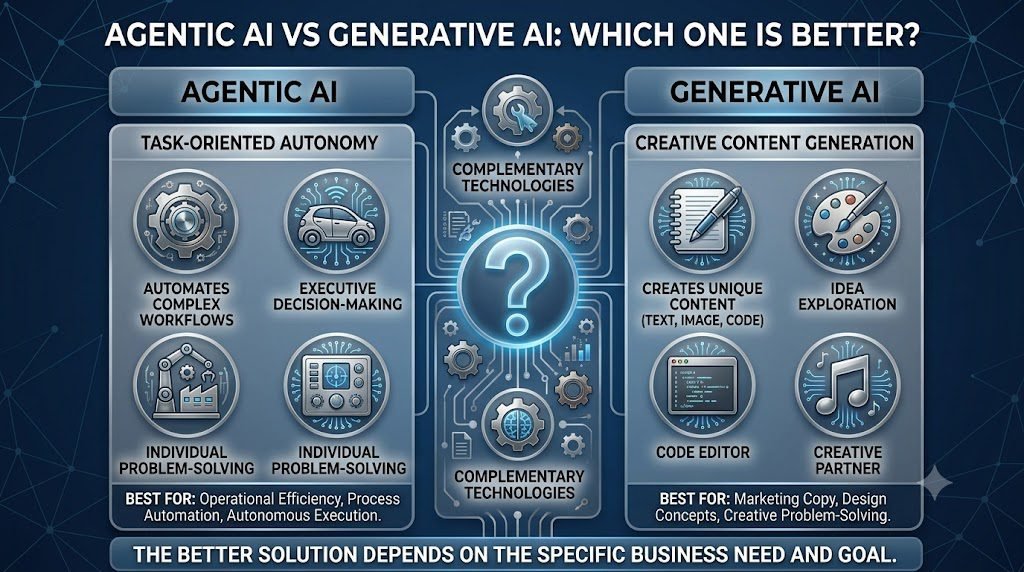
There is no single winner in the Agentic AI vs Generative AI comparison.
The right choice depends on the task.
Choose Generative AI when you need:
Content creation
Brainstorming
Summarisation
Writing assistance
Image generation
Code generation
Quick information support
Choose Agentic AI when you need:
Multi-step workflows
Task automation
Tool integration
Goal-based execution
Decision-making workflows
Continuous monitoring
Process optimisation
In many cases, businesses will use both together.
That combination can create a more efficient AI-powered workflow.
Conclusion
The debate around Agentic AI vs Generative AI is not really about deciding which technology will replace the other.
It is about understanding what each technology can do.
Generative AI has changed how we create and consume digital content.
Agentic AI is taking the next step by focusing on goals, workflows and actions.
The shift is simple to understand:
Generative AI helps you create.
Agentic AI helps you accomplish.
For businesses, students and professionals, understanding this difference can help them make smarter decisions about AI adoption.
The AI era is moving quickly.
The people who learn how these technologies work—and how to use them responsibly—will be better prepared for the opportunities ahead.
Learn for the AI Era with Vidya Sarthi
AI is changing the skills businesses need and the way professionals work.
Whether you are a student starting your career or a professional looking to upgrade your skills, learning about technologies such as Generative AI and Agentic AI can help you prepare for the future.
Vidya Sarthi can help you take the next step in your learning journey.
Explore opportunities to build relevant skills, expand your knowledge and prepare yourself for an AI-powered future.
Learn today. Build your skills. Stay ready for tomorrow.