Introduction
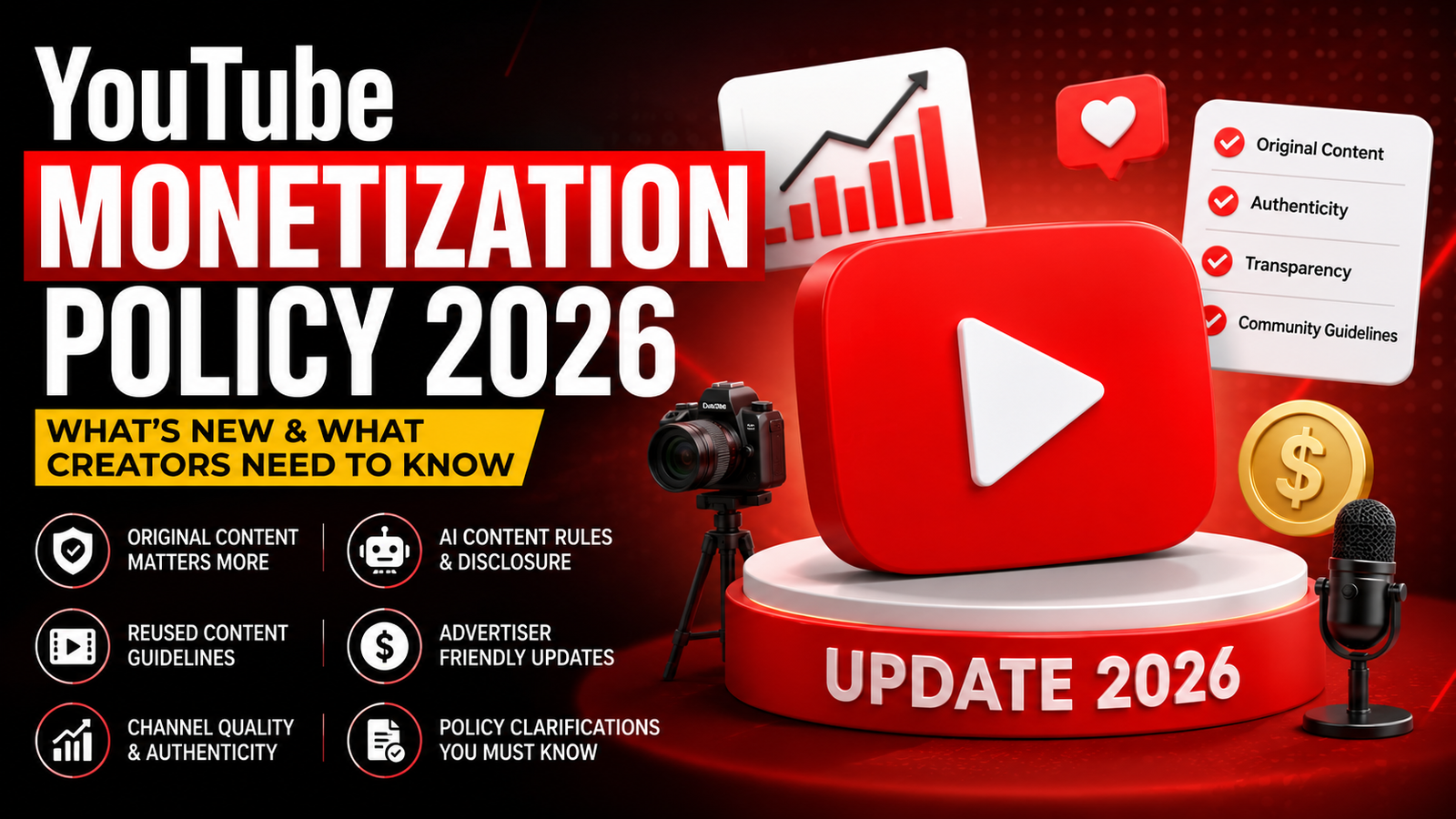
YouTube remains one of the biggest platforms for creators to build an audience, grow a personal brand, and earn online. But in 2026, simply uploading videos consistently is no longer enough. Creators also need to understand how YouTube evaluates originality, AI-generated content, reused content, advertiser suitability, and overall channel quality.
The YouTube monetization policy 2026 is especially important for creators who use AI tools, repurpose clips, create Shorts, or publish videos at scale. The good news is that YouTube has not introduced a completely new monetization system. Instead, it continues to strengthen existing rules around authentic content while making several policy clarifications and advertiser-friendly updates.
This YouTube monetization update matters because a channel can have views and subscribers but still struggle to qualify for or retain monetization if its content looks repetitive, mass-produced, misleading, or insufficiently original.
Summary: What Is New in the YouTube Monetization Policy 2026?
The biggest takeaway from the YouTube monetization policy 2026 is simple: originality and viewer value matter more than ever.
Here are the major points creators should know:
YouTube continues to restrict repetitive and mass-produced content.
The platform renamed its “repetitious content” policy to “inauthentic content” in 2025 to clarify its existing approach.
AI-assisted content is not automatically demonetized, but creators must add meaningful originality and value.
YouTube continues to enforce its reused-content policy separately from copyright rules.
AI-generated or meaningfully altered realistic content may require disclosure.
Advertiser-friendly guidelines continue to evolve in 2026.
YouTube has updated some rules around shocking, controversial and violent content, which can affect ad eligibility.
The YouTube monetization changes are therefore less about banning specific tools and more about raising the quality bar for content that wants to earn consistently.
YouTube Monetization Policy 2026: Original Content Is the Priority

One of the most important parts of the YouTube monetization policy 2026 is YouTube’s focus on original and authentic content.
According to YouTube, monetized content should not be mass-produced, generic, repetitive, or created primarily to generate views. Reviewers can consider the overall channel, including its main theme, most-viewed videos, newest videos, metadata, and other channel information.
This means creators should stop thinking only about individual videos.
YouTube may look at the overall pattern of your channel.
For example, uploading 50 videos that use the same template, same narration structure, similar visuals, and minimal new information could create monetization problems.
On the other hand, a series can still be monetized when each video provides a distinct idea, storyline, educational angle, or creative experience.
What Creators Should Do
Instead of asking, “How quickly can I produce another video?”, ask:
“What new value does this video provide?”
Add your own opinions, examples, storytelling, research, analysis, demonstrations, or experiences. This makes your content more useful and clearly differentiated.
AI Content and YouTube Monetization Changes
AI is one of the biggest reasons creators are searching for the latest YouTube monetization update.
There is an important distinction here: using AI is not automatically against YouTube monetization rules.
YouTube has stated that creators can use AI for scripts, visuals, voiceovers, editing, and other parts of production. However, the final content still needs to demonstrate originality and meaningful value.
The risk appears when creators use AI to mass-produce videos with little human input or differentiation.
For example:
Higher-risk approach:
AI-generated script
Generic AI voice
Stock or AI visuals
Same template for every video
Little research or original commentary
Better approach:
Use AI for research assistance or brainstorming
Add your own expertise and perspective
Fact-check information
Create original storytelling
Add unique visuals, examples, interviews, or demonstrations
Make every video meaningfully different
YouTube also requires creators to disclose certain realistic AI-generated or meaningfully altered content. Disclosing eligible AI content does not automatically reduce monetization eligibility, but consistently failing to disclose required content can lead to penalties.
So, the real YouTube monetization changes are not “AI is banned.” The direction is closer to AI can assist creation, but it should not replace originality.
Reused Content Still Matters
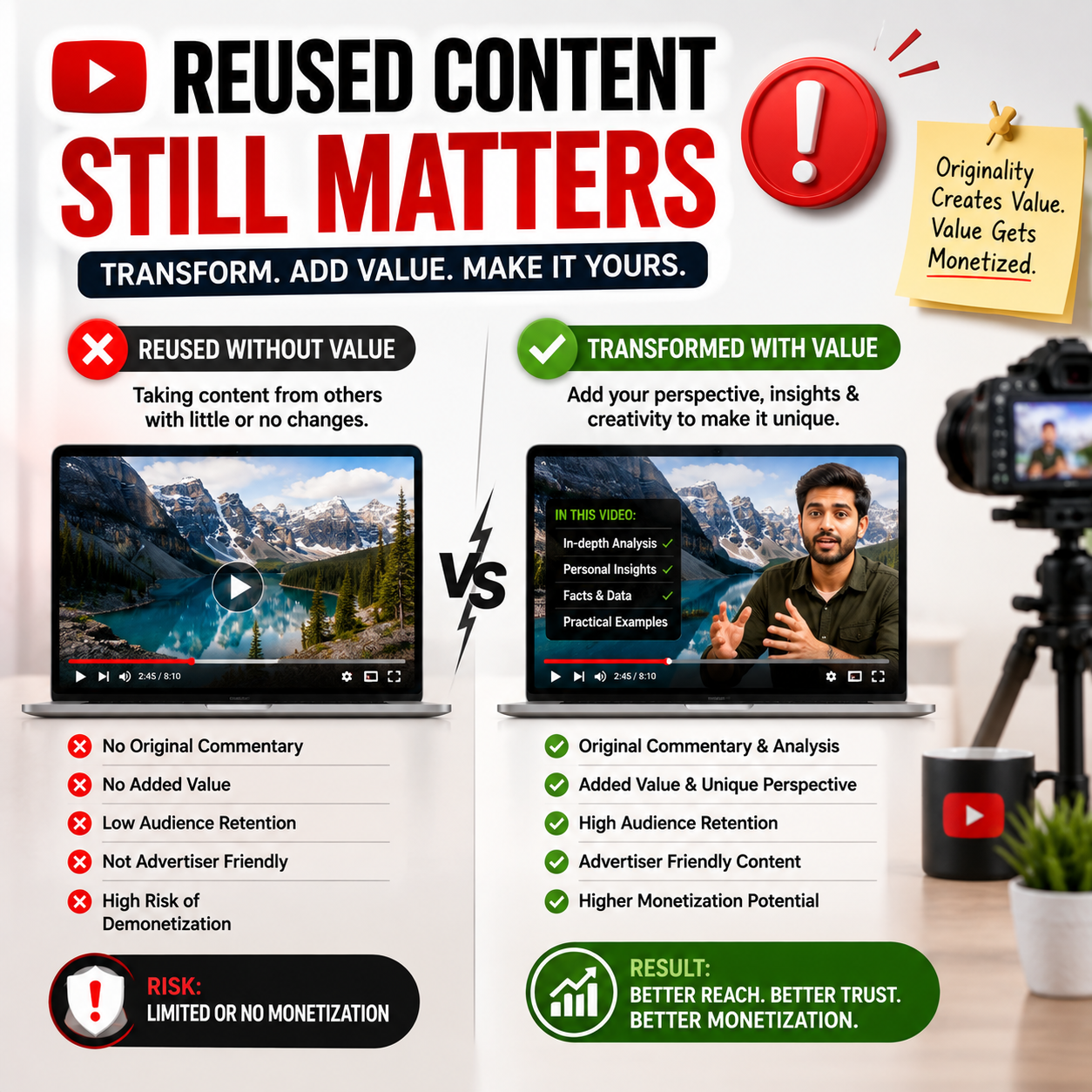
Another major area creators need to watch in the YouTube monetization policy 2026 is reused content.
Simply taking someone else’s video, adding minor edits, and uploading it again does not make it original.
YouTube says reused content can include videos that repurpose existing online material without significant original commentary, substantive modifications, or educational or entertainment value.
However, transformative content can still qualify.
For example:
Critical reviews
Reaction videos with meaningful commentary
Sports analysis
Educational breakdowns
Commentary-based clips
Edited footage with a new storyline
The key question is: Can viewers clearly see what you added?
Also remember that monetization policy and copyright are separate issues. Even if you have permission to use another person’s material, the content may still face reused-content monetization concerns.
Advertiser-Friendly Content in 2026
The YouTube monetization update is not limited to channel-level originality.
Advertiser-friendly guidelines also continue to change.
In 2026, YouTube updated its guidance around violent content, including clarification about depictions of death in educational, documentary, or news-reporting contexts. Earlier 2026 updates also addressed shocking content involving subjects that appear young and certain controversial topics.
This means creators should think beyond:
“Can YouTube monetize my channel?”
They should also ask:
“Will advertisers want to appear alongside this particular video?”
A channel can remain in the Partner Program while individual videos receive limited or no ad revenue because they do not meet advertiser-friendly requirements.
How Creators Can Stay Safe in 2026
Following the YouTube monetization policy 2026 does not have to be complicated.
Use this simple checklist:
1. Make Every Video Meaningfully Different : Avoid publishing dozens of videos that feel like copies of each other.
2. Add Your Own Perspective : Your experience, analysis, commentary, and storytelling can make content more authentic.
3. Use AI Responsibly : AI can speed up production, but do not let automation turn your channel into a content factory.
4. Be Careful With Reused Content : If you use third-party clips, add substantial commentary, analysis, education, or entertainment value.
5. Check Advertiser Suitability : Review sensitive topics before publishing, especially content involving violence, shocking material, controversial issues, or other advertiser-sensitive themes.
6. Think About the Entire Channel : YouTube reviews channels, not just individual uploads. Keep your content strategy consistent with quality and originality.
The YouTube guidance also recommends following Community Guidelines, Terms of Service, copyright requirements, and AdSense policies alongside monetization rules.
FAQs About YouTube Monetization Policy 2026
Is AI-generated content allowed on YouTube in 2026?
Yes. AI use itself does not automatically disqualify a creator from monetization. However, content still needs to follow YouTube’s originality and monetization policies. Creators may also need to disclose realistic AI-generated or meaningfully altered content.
Did YouTube completely ban repetitive content?
No. YouTube clarified its existing policy in 2025 by renaming “repetitious content” as “inauthentic content.” The focus is on content that is repetitive, mass-produced, generic, or lacks meaningful viewer value.
Can reaction videos still be monetized?
Yes, provided they add meaningful original commentary or transformation. YouTube specifically lists commentary-based reaction content among examples that can qualify for monetization.
Does using AI automatically reduce monetization?
No. YouTube’s policies do not automatically penalize creators simply for using AI. The bigger concern is whether the final content is original, authentic, useful, and compliant with disclosure requirements where applicable.
What is the biggest YouTube monetization change creators should know?
The biggest practical lesson is that creators should not depend on mass-produced, repetitive content. The YouTube monetization policy 2026 increasingly rewards content that provides clear originality, creativity, education, entertainment, or a distinct creator perspective.
Conclusion
The YouTube monetization policy 2026 sends a clear message to creators: quality matters more than quantity.
YouTube is not asking creators to stop using AI or avoid popular formats. Instead, the platform wants content that feels authentic, useful, original, and valuable to viewers.
For creators, this is actually an opportunity.
Instead of chasing hundreds of automated uploads, focus on building a recognizable voice, strong storytelling, useful information, and content that audiences genuinely want to watch.
The smartest approach to the latest YouTube monetization changes is not to fear the rules. It is to understand them and build your content strategy around them.
Build Smarter Digital Skills With Vidya Sarthi
Want to understand digital marketing, content creation, SEO, AI tools, and the skills shaping today’s digital economy?
Vidya Sarthi can help you learn the right skills and move from simply consuming digital content to creating meaningful digital growth.
Explore the right learning opportunities, strengthen your digital skills, and prepare yourself for a creator economy where knowledge, creativity, and authenticity matter more than ever.
Start learning. Start creating. Start growing with Vidya Sarthi.